Hello, curious Grade 6 detectives!
Today, we embark on an adventurous journey to become skilled data collectors. Imagine yourself as a scientist, investigator, or journalist, gathering valuable information from the world around you. With direct observation, experiments, interviews, and questionnaires as our tools, we will uncover hidden truths and solve intriguing puzzles. Get ready to unleash your inner data detective!
What is Data Collection?
Before we begin our exciting mission, let’s understand what data collection is all about. Data collection is the process of gathering information or evidence to answer questions, draw conclusions, or make informed decisions. Just like detectives, we use various methods to collect data, each one offering unique insights into the world.
Mathematics lesson plans – Become a member of the Grade 6 Comprehensive Learning Lesson Plan Club!
Data Collection Methods:
- Direct Observation: As data detectives, we use our keen senses to directly observe and record information from the world around us. Whether it’s counting the number of cars passing by, identifying bird species in the park, or noting the weather conditions, direct observation provides real-time data that can be accurate and reliable.
- Experiments: Imagine setting up controlled experiments like scientists in a lab. By manipulating variables and observing the outcomes, we can uncover cause-and-effect relationships. For instance, we could investigate which plant grows faster in different types of soil or how various factors affect the melting rate of ice.
- Interviews: Data detectives often wear the hat of a journalist, seeking information through interviews. We craft thoughtful questions and engage in conversations to gather people’s opinions, experiences, and preferences. From understanding favorite subjects at school to exploring hobbies and interests, interviews offer valuable insights into the human mind.
- Questionnaires: Like surveyors, we use questionnaires to gather data from a larger group of people. With well-designed questions and multiple respondents, we can collect data on various topics, such as favorite foods, leisure activities, or community issues.
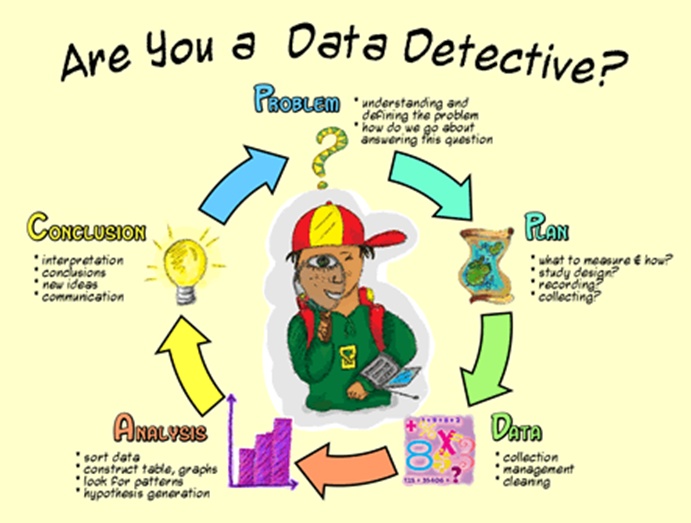
Becoming a Data Detective:
Now that we’ve learned about these fantastic data collection methods, it’s time for you to put on your detective hats and start collecting data!
- Choose Your Mission: Select a topic or question you’d like to investigate. It could be related to your school, community, hobbies, or anything that piques your curiosity.
- Pick Your Method: Decide which data collection method (direct observation, experiment, interview, or questionnaire) is most suitable for your mission. Consider what kind of data you want to collect and the resources available.
- Gather Information: Begin your data collection adventure! Record your observations, conduct experiments, talk to people, or distribute questionnaires. Remember to be accurate and unbiased in gathering information.
- Analyze and Draw Conclusions: Once you’ve gathered your data, organize and analyze it to draw meaningful conclusions. You might discover interesting patterns, trends, or even unexpected surprises!
Congratulations, young data detectives! You’ve mastered the art of data collection through direct observation, experiments, interviews, and questionnaires. Armed with these valuable skills, you can uncover mysteries, answer questions, and make informed decisions in various aspects of life.
As you continue your data collection journey, remember to use these methods responsibly and ethically. Data can be a powerful tool for positive change and understanding the world around us.
Happy data detecting!
Mathematics lesson plans – Become a member of the Grade 6 Comprehensive Learning Lesson Plan Club!
Please see related topic:
Unraveling Data Secrets: Becoming a Master Detective of Patterns and Trends
Data Detective Adventure: Unlocking Insights with Stem and Leaf Plots
Data Detective Challenge: Unraveling Mysteries through Graphs and Diagrams!
Data Visualization Made Simple: Choosing the Right Tables and Graphs
 Read It Yourself Educational Resources
Love this post. Real good content 👍
LikeLiked by 1 person