The skeletal system is the framework of the body. It is made up of several bones that facilitate movement and give the body structure and support.
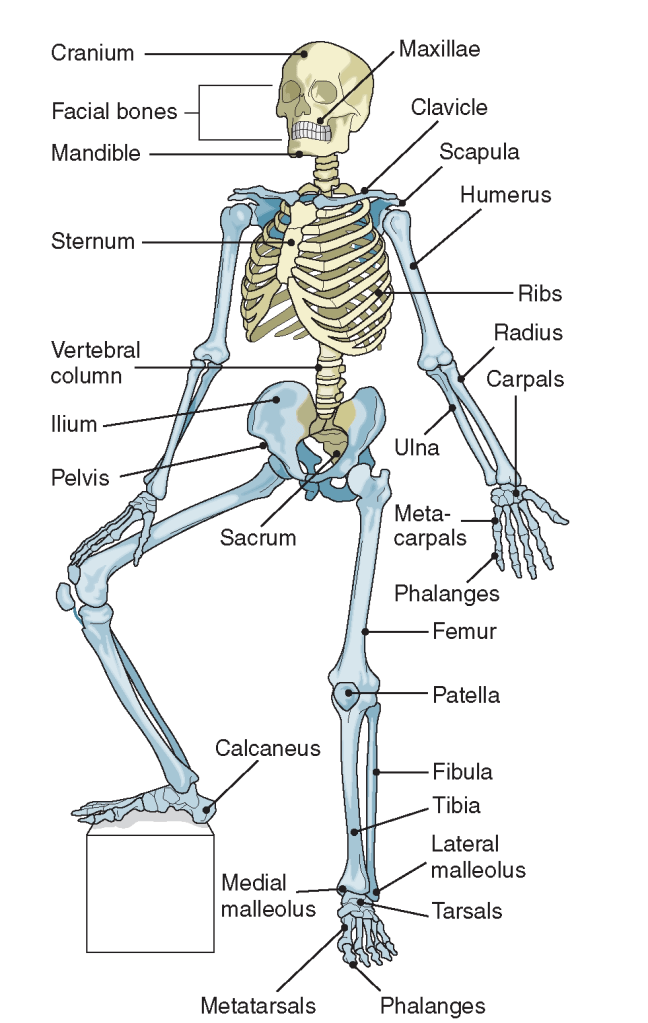
The skeletal system is divided into the axial skeleton and the appendicular skeleton. The axial skeleton mainly provides support and protects the brain, spinal cord, and organs inside the thorax (chest). The appendicular skeleton provides a point of attachment for the upper and lower limbs.

The Axial Skeleton
Including the skull, hyoid bone, rib cage, and vertebral column, the axial skeleton forms the central axis of the body. Its main function is to protect the central nervous system (brain and spinal cord).
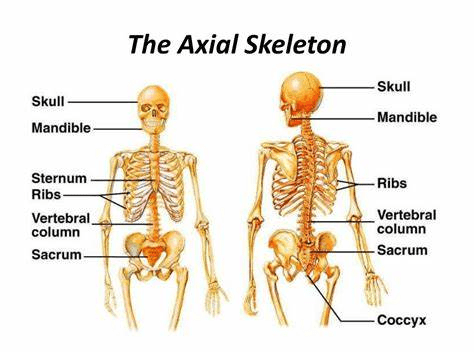
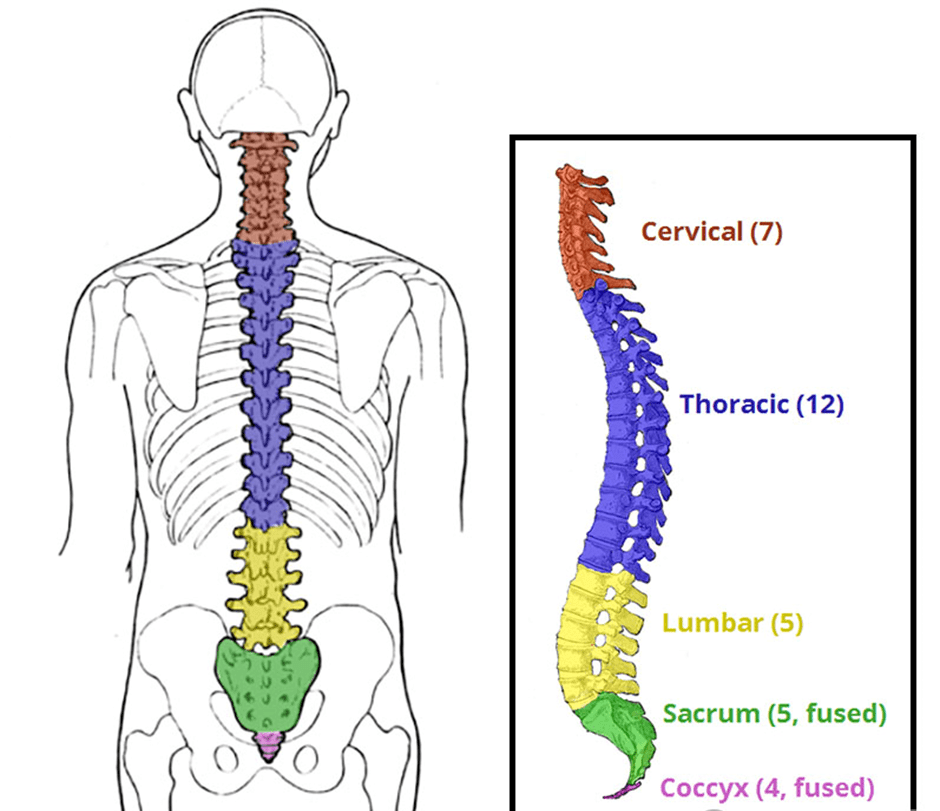
The brain and sensory organs, such as the eyes and inner ear, are protected by the skull. The spinal cord is connected to the brain and exits the skull. It is then surrounded by a long bony structure called the vertebral column. It is made up of 5 different types of vertebrae:
- cervical
- thoracic
- lumbar
- sacral
- coccygeal
The appendicular skeleton
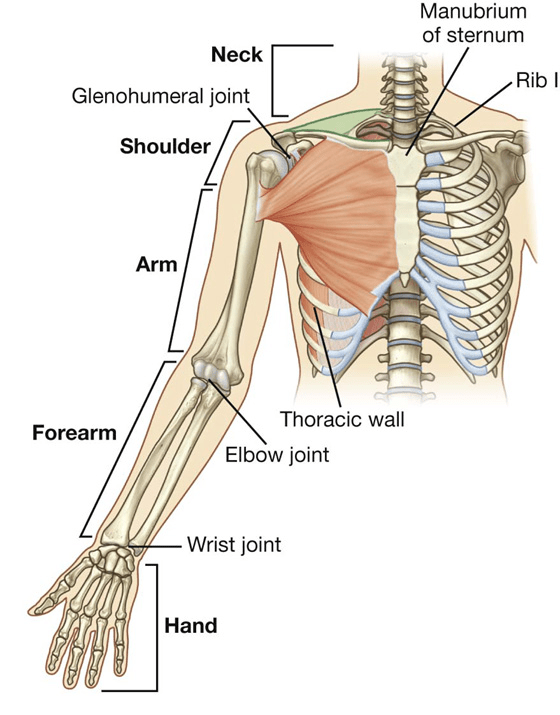
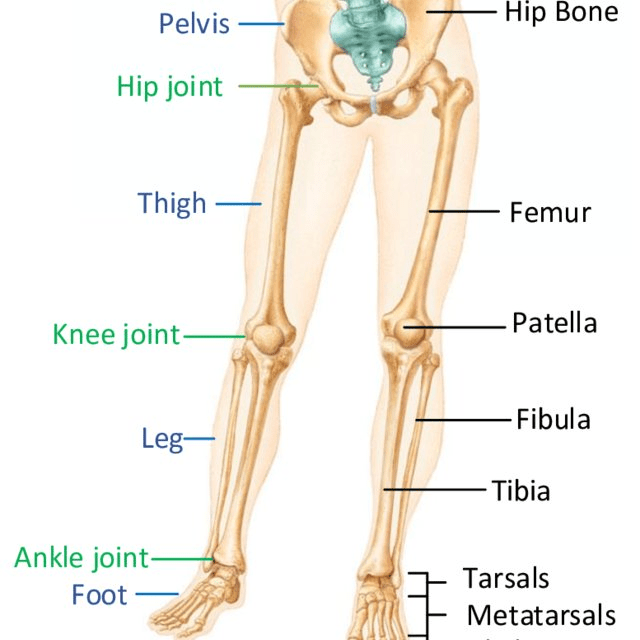
Including the lower extremities which enable walking, and the upper extremities which allows for the manipulation of objects, the appendicular skeleton consists of the bones that make up the limbs and connect them to the rest of the body.

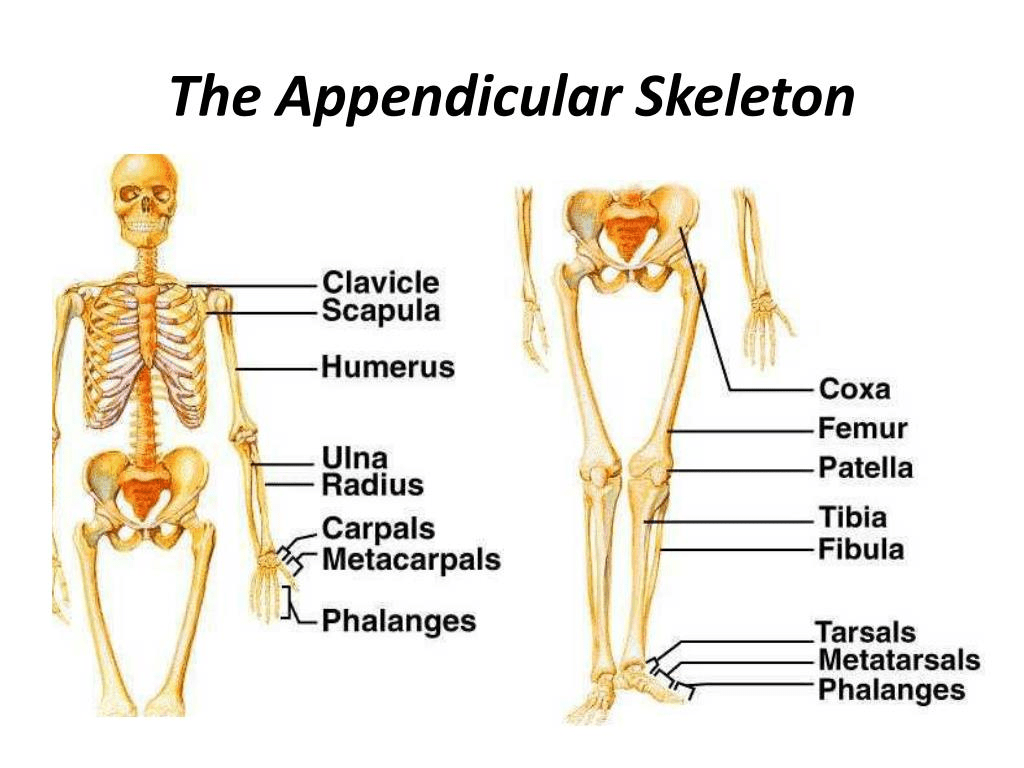
The upper extremities consist of the: shoulder, upper arm, elbow, forearm, wrist and hand,
The lower extremities consist of the: hip, thigh, knee, lower leg, ankle and foot.
The Composition of Bones
Bones are composed of three layers:
- an outer layer known as compact bone
- a deeper layer known as spongy bone
- a core component known as bone marrow
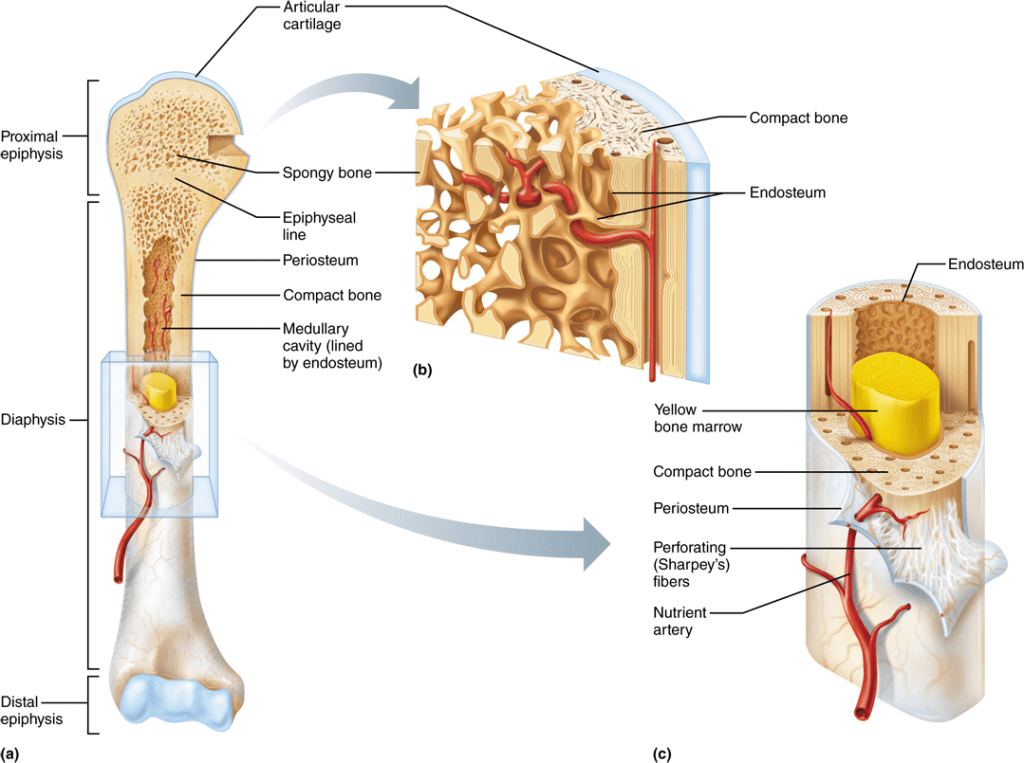
Compact bone is usually smooth and solid, while spongy bone is hollow and comprised of a network of thin bony structures called trabeculae.
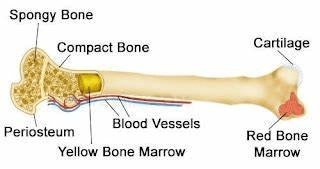
Bone marrow can be red or yellow. Red bone marrow consists of blood and usually disappears over time. Yellow bone marrow, on the other hand, mostly contains fat and becomes the predominant type of bone marrow as humans grow older.
Parts of the long bone
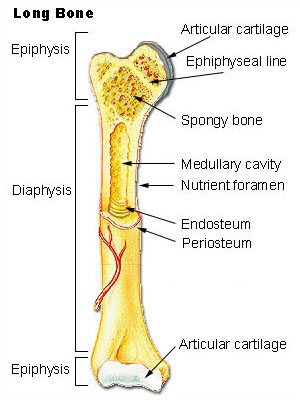
- Epiphysis –this is the extended part of the end of the bone. One could say the wide end of the long bone and it is very important in bone growth. It is composed mainly of spongy bone.
- Diaphysis – this is the shaft of the long bone, it is covered by periosteum and contains compact bone
- Epiphyseal plate (of cartilage) – covers the epiphyses of bone.
- Metaphysis-this is the flared part of the diaphysis and its closest to the epiphysis
- Medullary Cavity– this is a hallow space between the shaft of lone bones and it is filled with bone marrow
- Periosteum – Outermost layer that supplies blood and nerves to the bone
- Compact bone -hard bone beneath periosteum mainly found in shaft
- Spongy bone – this bone is light and is found near joints
- Bone marrow – there are two types: Red and yellow bone marrow.
https://3af55bx3z7ml0sf–h192fyg0c.hop.clickbank.net/?tid=00041
 Read It Yourself Educational Resources
Thank you very much for all the different topics you have sent me.I really appreciate them.
Sent from Yahoo Mail for iPhone
LikeLiked by 1 person