Here are some engaging examples and activities to teach the concepts of the basic needs of living things to 4th-grade students:
1. Interactive Discussion

Objective:
Recall the characteristics of living things.
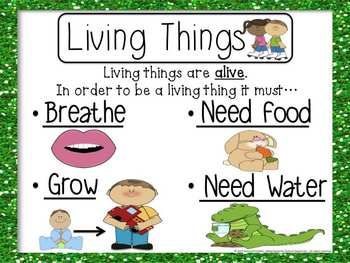
Activity: Start with a class discussion. Ask students to name different living things (e.g., pets, plants, insects). Write their responses on the board. Then, prompt them to identify characteristics that all these living things share, such as growth, reproduction, and response to the environment.
2. Sorting Needs and Wants
Objective:
Explain the difference between needs and wants.
Activity: Provide students with a variety of pictures or cut-out images representing different items (food, toys, water, shelter, etc.). Have them sort the images into two categories: “Needs” and “Wants.” Discuss their choices as a class and clarify any misconceptions.

3. Basic Needs Scavenger Hunt

Objective:
List the basic needs of all living things.
Activity: Organize a scavenger hunt around the classroom or schoolyard. Assign each student or small group a specific need (air, water, food, shelter) and have them find items that represent that need. For example, they could find a water bottle for water or a shaded area for shelter. Afterward, have students share their findings with the class.
4. Create a Living Thing Poster
Objective:
Illustrate the basic needs of a living thing.
Activity: Have students choose a living thing (a pet, plant, or animal) and create a poster. They should include:
- A drawing or picture of the living thing.
- A list of its basic needs.
- An explanation of how it meets those needs in its environment.
- Display the posters around the classroom.
5. Role-Playing
Objective: Understand how living things meet their needs.
Activity: Have students role-play different living things. Assign roles (e.g., a plant, a dog, a bird) and have them act out how they find their basic needs. For example, the “plant” might “reach” for sunlight and “drink” water from a pretend watering can. This activity encourages physical movement and engagement.
6. Classroom Garden Project

Objective:
Apply knowledge of needs in a real-life context.
Activity: Start a small classroom garden. Students can plant seeds (like beans or flowers) and learn about what plants need to grow. Discuss how they will provide sunlight, water, and soil. This hands-on project reinforces the concepts of care and responsibility for living things.
7. Need and Want Journals
Objective:
Reflect on personal needs and wants.
Activity: Have students keep a journal for a week where they record their daily needs and wants. Each day, they should write down at least one need and one want they experienced. At the end of the week, discuss as a class how identifying these can help in understanding the importance of needs for survival.

These activities are designed to engage students, encourage critical thinking, and reinforce the understanding of the basic needs of living things in a fun and interactive way.
 Read It Yourself Educational Resources