Here’s a detailed Grade Four Science lesson plan based on the objectives you’ve provided, using Jamaica’s National Standard Curriculum and the 5Es instructional model:
Grade 4 Science Lesson Plan:
Grade Level: 4
Duration: 2 Days
Subject: Science
Term 1: Unit 1: Exploring our world
THEME: Science Exploration, Application and Design Practice
Focus Question: How do we find out about our world?
Topic: Methods to Gain Scientific Knowledge and Planning Investigations
Objectives:
- Explore the methods used to gain scientific knowledge.
- Plan simple scientific investigations to answer questions and solve problems.
Teaching Resources/Materials:
Short video on scientific methods or images of scientists, Small plants, boxes, rulers, Chart paper, markers, Graphic organizers and planning sheets, Various materials for investigation (paper towels, ice, plastic wrap, foil, etc.)
Lesson Content
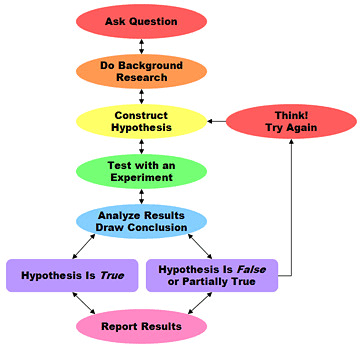
Methods to Gain Scientific Knowledge
Asking questions
Forming hypotheses
Conducting experiments
Observing and recording data
Drawing conclusions
Planning Investigations
Analyze results and draw conclusions
Identify a question or problem
Predict outcomes (hypothesis)
Design an experiment (materials and methods)
Record observations
Teaching/Learning Procedure:
Engage:
Activity Objective: Spark students’ interest in the scientific process.
Begin with a short discussion or video clip about how scientists work, showing examples of real-life investigations (e.g., discovering new plants, developing new medicines, solving environmental issues).
Question: “How do you think scientists discover these things?”
Materials: Short video on scientific investigations or images showing famous scientists like Louis Pasteur or Marie Curie.
Differentiation:
- Tier 1: Pair discussion with a partner after watching the video.
- Tier 2: Provide sentence starters to help express their thoughts.
- Tier 3: Allow the use of visuals or keywords to share what they learned.
Explore:
Activity Objective: Let students experience inquiry-based learning.
In groups, students will work on simple experiments, such as observing the growth of a plant under different light conditions (e.g., one plant in sunlight, one in a dark space). They will come up with a question related to the experiment and suggest ways to investigate it.
Guiding Question: “What do you think will happen if we place a plant in the dark?”
Materials: Small plants, boxes (for dark conditions), rulers, and notebooks.
Differentiation:
- Tier 1: Students follow step-by-step instructions provided by the teacher.
- Tier 2: Students come up with questions and hypothesis with some teacher guidance.
- Tier 3: Students will independently ask questions, make predictions, and write down their own plan for the experiment.
Explain:
Activity Objective: Help students understand the steps of a scientific investigation.
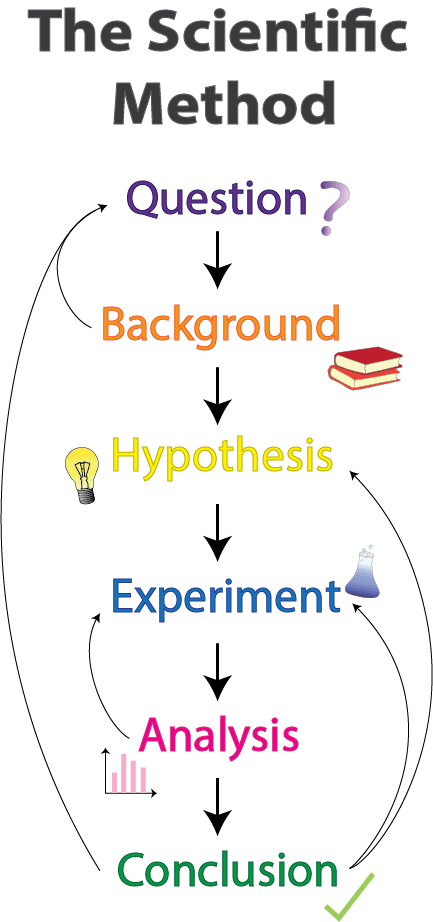
Discuss the steps of the scientific method:
Ask a Question
Make a Hypothesis
Conduct an Experiment
Observe and Record Data
Draw a Conclusion
Link this to the earlier plant experiment. Have students share their predictions and initial results.
Materials: Chart paper and markers for listing the scientific method steps.
Differentiation:
- Tier 1: Use a graphic organizer with pictures to help understand the steps.
- Tier 2: Provide sentence prompts to explain each step.
- Tier 3: Encourage students to create their own example of an investigation using the steps.
Elaborate:
Activity Objective: Deepen understanding by applying the knowledge to new situations.
Students will plan a new simple investigation. They could be given a choice of questions, like “What’s the best material for keeping ice from melting?” or “Which type of paper towel absorbs the most water?”
They will write down their plan, including a hypothesis, what they need, how they will conduct it, and what they expect to happen.
Materials: Planning sheets, various experiment materials (paper towels, ice, plastic wrap, foil, etc.).
Differentiation:
- Tier 1: Provide a scaffolded template for planning the investigation, with fill-in-the-blanks.
- Tier 2: Guide students to develop their own investigation with leading questions.
- Tier 3: Students develop an original investigation independently and make predictions.
Evaluate:
Activity Objective: Assess students’ understanding of scientific investigation methods.
Students will present their investigation plans to the class, explaining the steps and their predictions.
Use a rubric to assess their understanding of each step in the scientific method and the creativity of their plans.
Materials: Rubric, presentation space.
Differentiation:
- Tier 1: Allow students to present with a partner.
- Tier 2: Provide a visual representation of their investigation plan.
- Tier 3: Encourage independent presentations with detailed explanations.
Assessment
- Student participation in group work and discussions
- Completed scientific investigation plans
- Presentations of investigation plans
- Use of scientific method steps in independent tasks
This lesson plan incorporates the 5Es, allowing students to explore scientific methods and design their own investigations, with differentiation for varying abilities.
 Read It Yourself Educational Resources