Simple machines are basic mechanical devices that manipulate force and make tasks easier to accomplish by either changing the direction of the force applied or the magnitude of the force required. They are the building blocks of more complex machinery and are often found in everyday objects and tools.

There are six types of simple machines:
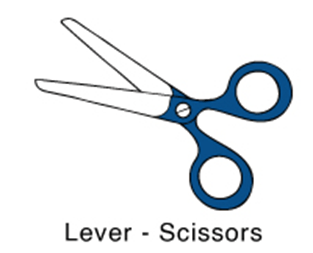
Lever:
A lever consists of a rigid bar (the lever arm) that pivots around a fixed point called the fulcrum. Examples include seesaws, crowbars, and scissors. Levers help lift heavy objects with less effort by applying force over a greater distance.
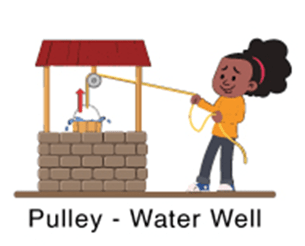
Pulley:
A pulley consists of a grooved wheel with a rope or belt wrapped around it. It is used to lift or lower objects by applying force to the rope. Examples include flagpoles, elevators, and clotheslines. Pulleys make it easier to lift heavy loads by distributing the force required.

Wheel and Axle:
A wheel and axle consist of a circular object (the wheel) attached to a rod (the axle). Examples include car wheels, doorknobs, and steering wheels. They reduce friction and allow for the transfer of force to move objects with greater ease.
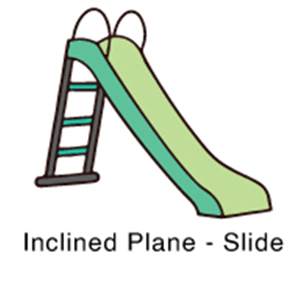
Inclined Plane:
An inclined plane is a sloping surface, such as a ramp or hill, that reduces the force needed to lift objects by allowing them to be moved upwards with less effort. Examples include ramps, staircases, and slides.
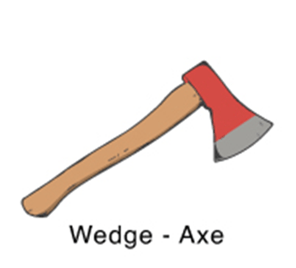
Wedge:
A wedge is a triangular-shaped object with a thin edge. Examples include knives, axes, and doorstops. Wedges help split, cut, or hold objects by applying force over a small area, allowing for easier penetration or separation.
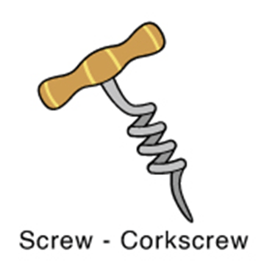
Screw:
A screw is a simple machine that consists of an inclined plane wrapped around a cylindrical shaft. Examples include screws, bolts, and jar lids. Screws help hold objects together or move them by converting rotational motion into linear motion.
Simple machines make our lives easier by:
- Reducing the amount of force needed to perform tasks.
- Allowing us to accomplish tasks more quickly and efficiently.
- Enabling us to overcome physical limitations and perform tasks that would be difficult or impossible without their assistance.
- Serving as the foundation for more complex machinery and technologies that drive modern civilization.
Overall, simple machines play a crucial role in various aspects of daily life, from lifting heavy objects to transportation and construction, making tasks more manageable and improving productivity and quality of life.
 Read It Yourself Educational Resources