What are morphemes and their role in word recognition?
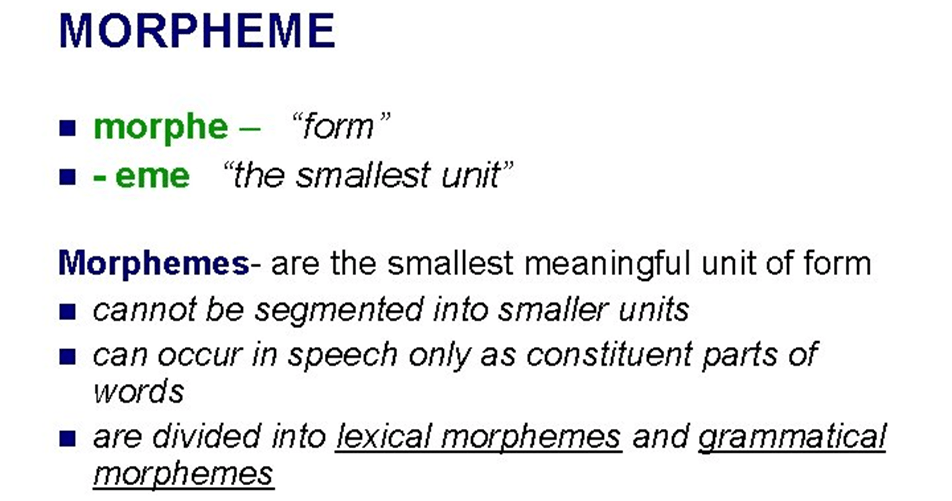
Morphemes are the smallest units of meaning in language. They can be individual words or parts of words, such as prefixes, suffixes, and root words.

Understanding morphemes is crucial for word recognition because it allows us to break down complex words into smaller, meaningful components. By identifying and analyzing morphemes within words, readers can decode unfamiliar words and infer their meanings based on the meanings of the morphemes they contain.

Here’s how morphemes play a role in word recognition:
Decoding: When encountering a new word, readers can use their knowledge of morphemes to decipher its meaning. By recognizing familiar prefixes, suffixes, or root words within the word, readers can make educated guesses about its definition.
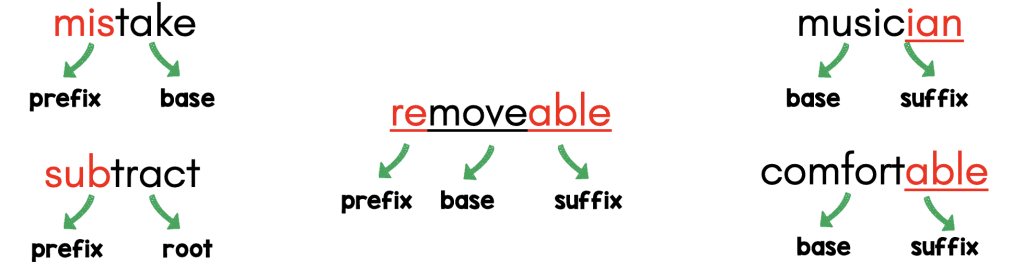
Encoding: Morphemic analysis also aids in encoding, or spelling, words correctly. Understanding the morphemic structure of words helps students to spell them accurately by recognizing common prefixes, suffixes, and root words.

Vocabulary Development: Morphemic analysis contributes to vocabulary development by allowing students to understand the meanings of words based on their morphemic components. By learning common morphemes and how they combine to form words, students can expand their vocabulary more effectively.

Word Families: Morphemes help establish connections between words that share similar meanings or origins. Words with common prefixes, suffixes, or root words often belong to the same word family, making it easier for students to learn related words and understand their relationships.
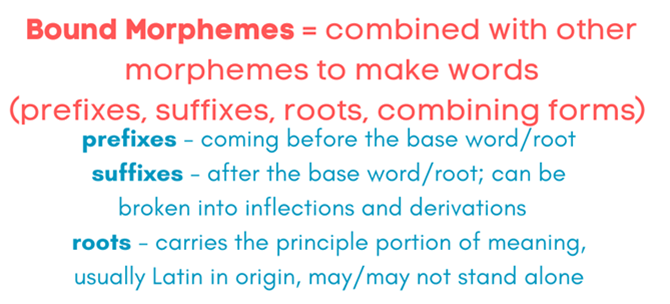
Benefits of morphemic analysis in word recognition.
It helps students:
- Decode unfamiliar words
- Understand the meanings of words
- Spell words correctly
- Expand their vocabulary
- Recognize relationships between words
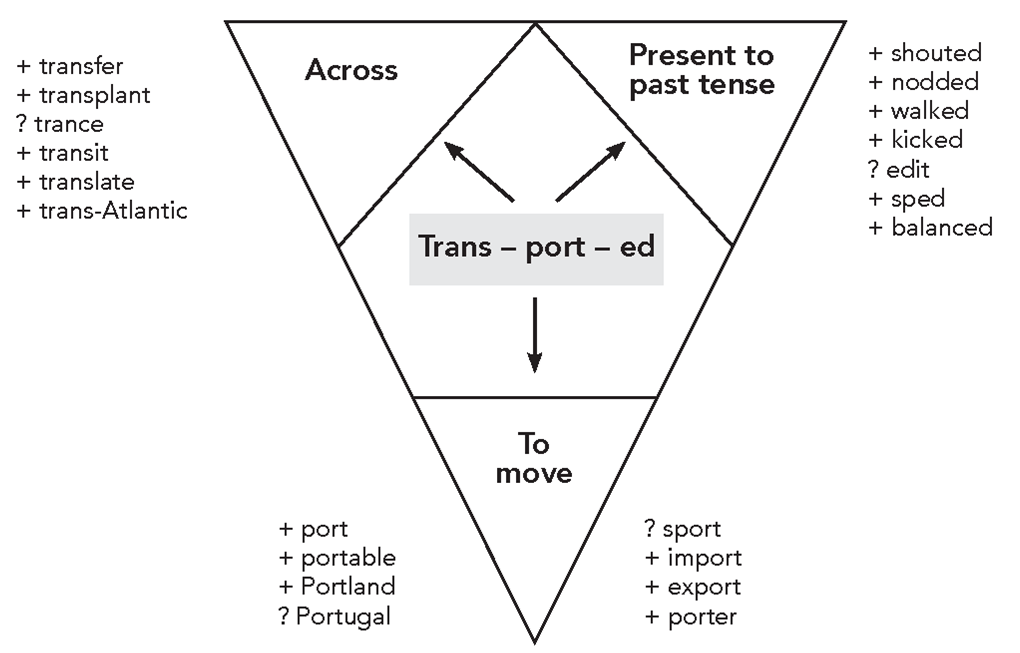
Overall, morphemes serve as building blocks of language, enabling readers to decode, encode, and understand words more effectively, thus enhancing their reading fluency, recognition, and vocabulary development.
 Read It Yourself Educational Resources
Interesting I believe you my blog
LikeLiked by 1 person