Here’s a three-day lesson plan for teaching beginning consonant sounds to Grade 4 students in accordance with Jamaica’s National Standard Curriculum:
Day 1:
Subject: Reading/Phonics
Topic: Introduction to Beginning Consonant Sounds
Specific Objective: By the end of the lesson, students will be able to:
- identify and pronounce beginning consonant sounds in words.
Teaching Resources/Materials: Whiteboard and markers, Pictures of objects starting with different consonant sounds (e.g., cat, dog, sun, book), Flashcards with words and corresponding images, Worksheets
Teaching/Learning Procedure:
Engage: Introduction
Begin by discussing the importance of consonant sounds in words.
Using Sound Exploration: Begin the lesson by telling the students that they are going on a sound exploration journey. Explain that every word is like a puzzle made up of different sounds, and today, you’ll focus on the starting sound, called the “beginning consonant sound.”
Show pictures of objects starting with different consonant sounds and ask students to identify the initial sound (e.g., “What sound does ‘cat’ start with?”).
Explain and Explore:
- Introduce the consonant sounds one by one (e.g., /b/, /c/, /d/).
- Use flashcards with words and images to reinforce each consonant sound. Have students repeat the words after you and identify the beginning sound.
- Engage in interactive activities where students listen to words and determine the initial consonant sound. For example, you could say, “I spy with my little eye, something that starts with the /b/ sound. What is it?”
- Practice writing the letters associated with the consonant sounds on the whiteboard.
Elaborate: Independent Practice
- Distribute worksheets that contain pictures of various objects.
- Have students circle or write the beginning consonant sound for each object.
- Walk around the class to provide individual assistance as needed.
Day 2:
Topic: Exploring More Beginning Consonant Sounds
Specific Objective: By the end of the lesson, students will be able to:
- identify and pronounce additional beginning consonant sounds.
Teaching Resources/Materials: Whiteboard and markers, Flashcards with words and corresponding images, Worksheets, Letter tiles or magnetic letters
Teaching/Learning Procedure:
Engage and Explain:
Begin the lesson by reviewing the consonant sounds learned on Day 1. Use flashcards or the whiteboard to reinforce these sounds.
Explore:
Introduce additional consonant sounds (e.g., /f/, /g/, /m/).

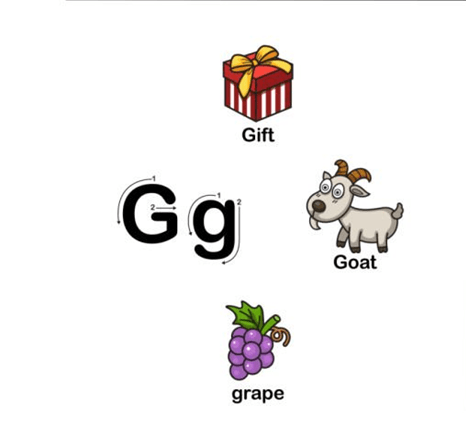
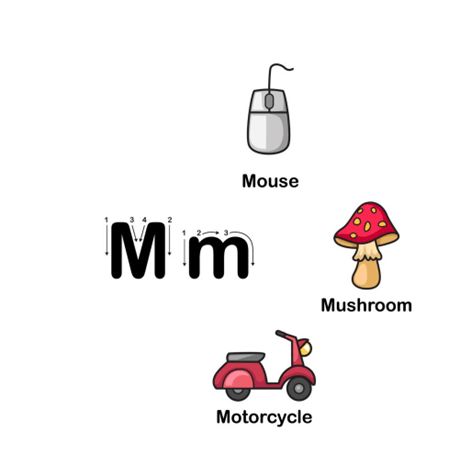
Use flashcards with words and images to teach and reinforce each consonant sound.
Engage in activities like sorting objects into different sound groups (e.g., objects that start with /b/ and objects that start with /f/).


Use letter tiles or magnetic letters to create simple words on the whiteboard, and ask students to identify the beginning sound.
Evaluate: Independent Practice
Distribute worksheets with pictures of objects that start with the new consonant sounds.

Have students circle or write the beginning consonant sound for each object.
Provide support and guidance as needed.
Day 3:
Topic: Blending and Reading Beginning Consonant Words
Specific Objective: By the end of the lesson, students will be able to:
- blend and read words with beginning consonant sounds.
Teaching Resources/Materials: Whiteboard and markers, Flashcards with consonant-vowel-consonant (CVC) words, Reading materials (books or passages with CVC words)
Teaching/Learning Procrdure:
Engage:
Begin the lesson by quickly reviewing all the consonant sounds learned so far.

Explain and Explore:
Introduce consonant-vowel-consonant (CVC) words that use the consonant sounds learned in the previous lessons (e.g., “cat,” “dog,” “bag”).


Use flashcards with CVC words and images to teach these words.
Demonstrate blending by saying the individual sounds and then blending them together to read the word (e.g., /c/ – /a/ – /t/ → “cat”).
Provide opportunities for students to practice blending CVC words both orally and in writing.

Read short passages or books containing CVC words together as a class.
Elaborate: Independent Practice
Distribute CVC word worksheets.
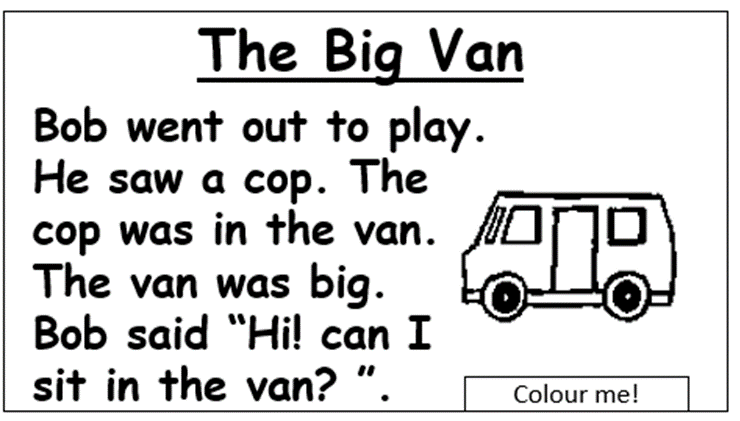
Have students read and write CVC words independently.
Evaluate:
Recap the lesson and review the importance of beginning consonant sounds in reading.
Encourage students to practice reading CVC words at home.
Remember to adjust the pace and difficulty of the lesson based on your students’ needs and abilities. You can also incorporate games and interactive activities to make learning more engaging and fun.
 Read It Yourself Educational Resources