Unveiling the Secrets of Science:
Science is a captivating journey of exploration, curiosity, and discovery. It’s not just a subject in textbooks; it’s a dynamic process that empowers us to unravel the mysteries of the world around us. In this blog post, we’ll delve into the fascinating methods scientists use to gain knowledge and the art of planning simple scientific investigations to find answers and solve problems.
Subscribe to download Lesson Plan
Get the complete download of Gr. 4 – Introduction to Science and Scientists – Week 1 when you subscribe today.
Methods Used to Gain Scientific Knowledge: Scientific knowledge isn’t magic; it’s a result of systematic methods that have been honed over centuries. Let’s unveil the key methods that scientists employ:
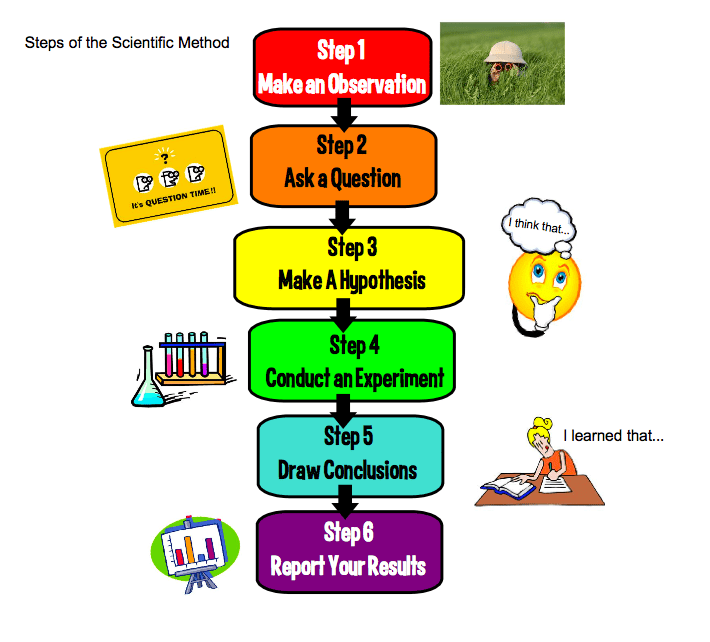
- Observation: Science often begins with keen observation. Scientists meticulously study the world around them, noting patterns, behaviors, and anomalies that spark their curiosity.
- Questioning: Curiosity fuels the scientific process. From simple “Why?” to more complex “How?” and “What if?” questions, scientists formulate inquiries that serve as the foundation for their investigations.
- Hypothesis: A hypothesis is an educated guess that proposes a possible explanation for a phenomenon. It’s the scientist’s initial prediction, based on existing knowledge and observations.
- Experimentation: Experiments are at the heart of scientific discovery. Scientists design controlled experiments to test their hypotheses. They manipulate variables, observe outcomes, and collect data to draw meaningful conclusions.
- Data Collection and Analysis: Accurate and thorough data collection is essential. Scientists gather data through measurements, observations, and recordings. This data is then meticulously analyzed to identify trends and patterns.
- Conclusion: Based on the data analysis, scientists draw conclusions about whether their hypotheses were supported or refuted. These conclusions contribute to our growing body of scientific knowledge.
Planning a Simple Scientific Investigation: Planning a scientific investigation is like charting a course for a journey of discovery. Here’s a step-by-step guide to planning a simple investigation:
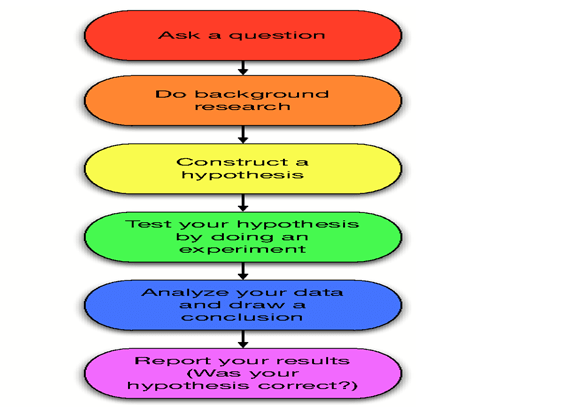
- Choose a Question: Start by identifying a question or problem you want to explore. For example, “What factors affect plant growth?”
- Formulate a Hypothesis: Create an educated guess about the answer to your question. For our example, you might hypothesize, “If plants receive more sunlight, they will grow taller.”
- Design an Experiment: Plan how you will test your hypothesis. Identify variables (the factors you’ll change) and constants (the factors you’ll keep the same). In our case, the variable could be sunlight exposure.
- Collect Materials: Gather the materials you’ll need for your experiment, such as plants, pots, soil, and a light source.
- Conduct the Experiment: Follow your plan and carry out the experiment. Document your steps and observations carefully.
- Collect Data: Measure and record the growth of the plants over a specific period.
- Analyze Data: Organize your data and look for patterns or trends. Calculate averages and make graphs if needed.
- Draw Conclusions: Based on your data analysis, draw conclusions about your hypothesis. Did the plants grow taller when exposed to more sunlight?
- Reflect: Reflect on your investigation. What did you learn? Could there be any improvements in your methods?
The methods used to gain scientific knowledge provide a structured approach to understanding the natural world. By observing, questioning, experimenting, and analyzing, scientists unlock new insights that shape our understanding of the universe. Similarly, planning and conducting simple scientific investigations empower us all to explore questions, solve problems, and contribute to the ongoing pursuit of knowledge. So, embrace your inner scientist, ask those intriguing questions, and embark on your own scientific explorations to unveil the wonders of the world around you.
Please see related Topics below:
Introduction to Science and Scientists
Exploring the Lives and Legacies of Marie Curie, Albert Einstein, and Jane Goodall
 Read It Yourself Educational Resources
2 thoughts on “Exploring Methods and Investigations of Science”