Mathematics is a language of numbers and symbols that allows us to quantify and understand the world around us. At the heart of this vast subject lies the four fundamental operations: addition, subtraction, multiplication, and division. These operations serve as the foundation for more complex mathematical concepts and are essential for everyday calculations. In this blog post, we will explore the importance of these four operations, their properties, and how they relate to one another. Whether you’re a student, professional, or simply curious about math, understanding these operations will unlock a world of numerical fluency.

Addition:
Building on Foundations Addition is the fundamental operation that combines two or more numbers to find their sum. It represents the act of combining or joining quantities. From counting objects to adding large numbers, addition is an essential skill in everyday life. Key concepts related to addition include the commutative property (the order of numbers does not affect the result) and the associative property (the grouping of numbers does not affect the result).
Subtraction:
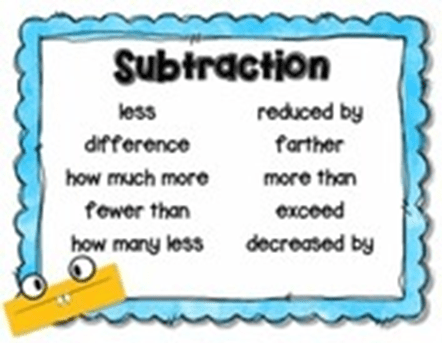
Taking Away and Finding the Difference Subtraction is the operation of taking away one quantity from another to find the difference. It is the inverse of addition and represents the process of finding out “how much is left?” after something has been taken away. Subtraction plays a vital role in various situations, such as calculating change, measuring distances, or solving mathematical puzzles. Understanding concepts like the minuend, subtrahend, and the difference is key to mastering subtraction.
Multiplication:
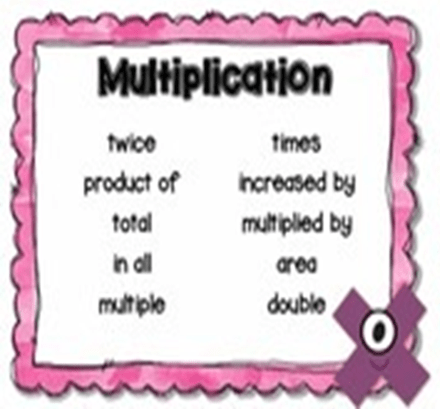
Repeated Addition and Scaling Multiplication is the operation of combining equal groups to find the total or product. It represents repeated addition or scaling of quantities. From calculating the total number of items in several equal-sized sets to determining the area of a rectangle, multiplication is a versatile operation with practical applications in numerous fields. The commutative and associative properties also apply to multiplication, enabling flexibility in arranging and grouping numbers.
Division:
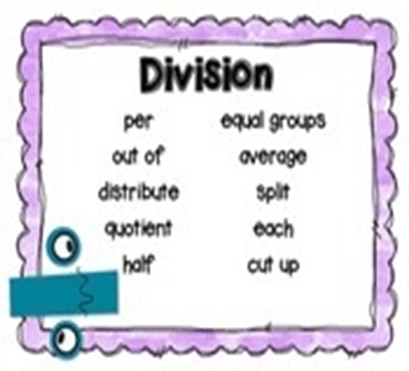
Sharing and Distribution Division is the operation of splitting a quantity into equal parts or groups. It is the inverse of multiplication and represents the process of finding out “how many in each group?” or “how many groups?”. Division is used in various scenarios, such as sharing equally among friends, calculating rates, or analyzing data sets. Understanding division as the opposite of multiplication and the concepts of dividend, divisor, quotient, and remainder will enhance your problem-solving abilities.
The four basic operations—addition, subtraction, multiplication, and division—are the cornerstone of mathematics. These operations provide us with the tools to manipulate numbers, solve problems, and make sense of the numerical world. By understanding their properties, relationships, and practical applications, we can become fluent in the language of mathematics. So, whether you’re crunching numbers in your everyday life, pursuing a STEM career, or simply appreciating the beauty of math, mastering these four operations will empower you to tackle more complex mathematical concepts with confidence. Remember, strong foundations lead to soaring heights in the realm of numbers!
See related Topics:
Steps for word problem success
Writing and Solving Two-Step Word Problems
RUCSAC Problem Solving Strategy: A Guide to Conquer Any Challenge
 Read It Yourself Educational Resources